Courses Taught (2009-present)
Descending order:
2017, 2019, 2023: Conservation Biology (biology undergrad majors lecture course), BIOL 4800, ECU
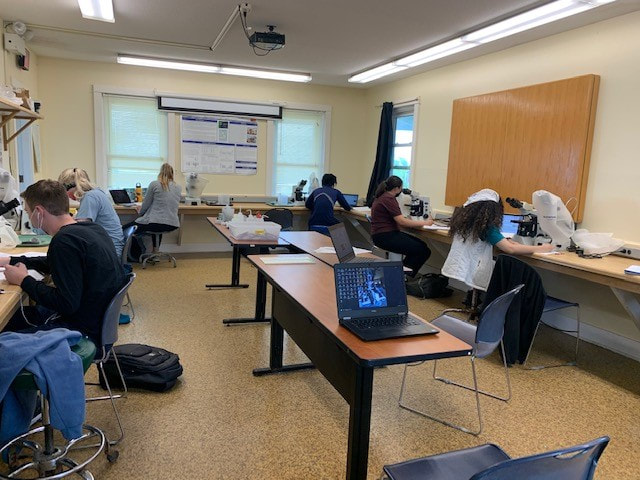
2018, 2019, 2022: Aquatic Parasitology & Disease (biology undergrad and grad lecture/lab course), BIOL 4800, BIOL 6220, ECU
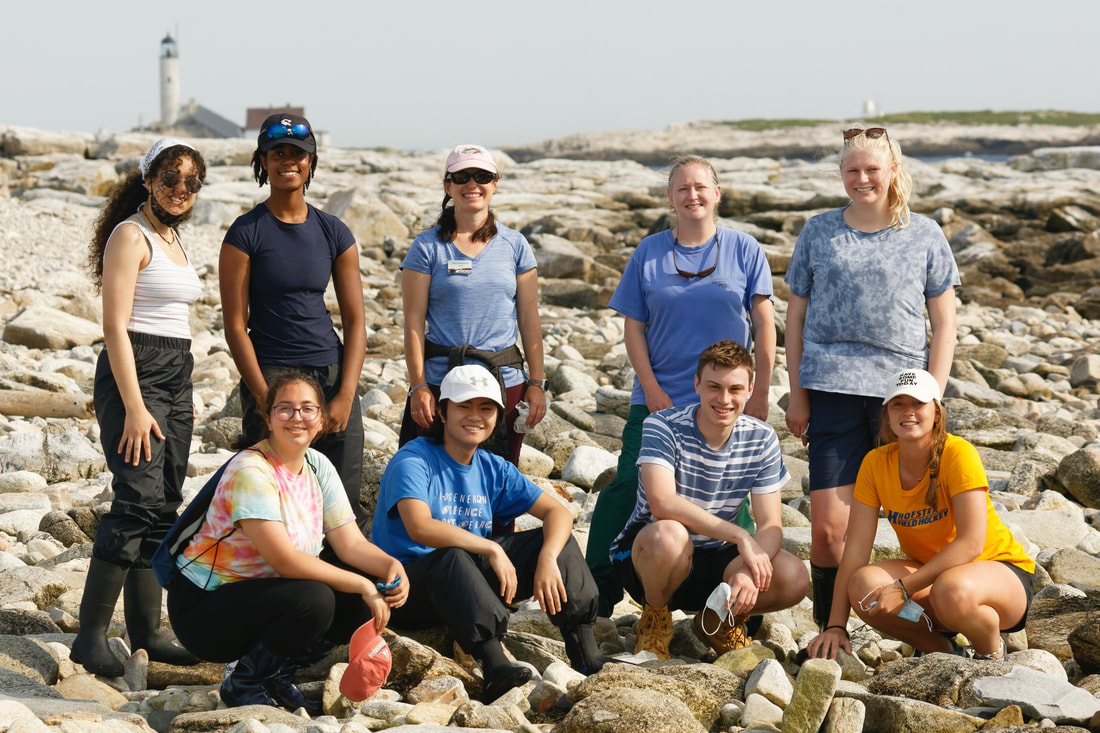
2018, 2019, 2021, 2022, 2023: Marine Parasitology & Disease (undergrad lecture and field course), BIOSM 3330 (Cornell), MEFB 506 (UNH), Shoals Marine Laboratory (Appledore Island, ME): www.shoalsmarinelaboratory.org/course/marine-parasitology-and-disease
2022, 2023: Marine Invasive Species (undergrad lecture and field course), BIOSM 3340 (Cornell) / MEFB 720 (UNH), Shoals
Marine Laboratory (Appledore Island, ME). https://www.shoalsmarinelaboratory.org/course/marine-invasive-species
2022: Conservation Biology, BIOL 7920, ECU, grad level lecture-based class
2015, 2016, 2017, 2018, 2020, 2021, 2023: Environmental Biology (non-majors undergrad lecture course), BIOL 1060, ECU
2020: Invasion Biology, BIOL 6850, grad level discussion class, ECU
2019: Comparative Immunology and Conservation Implications, BIOL 4800/6220 (team-taught undergrad and grad discussion course), ECU
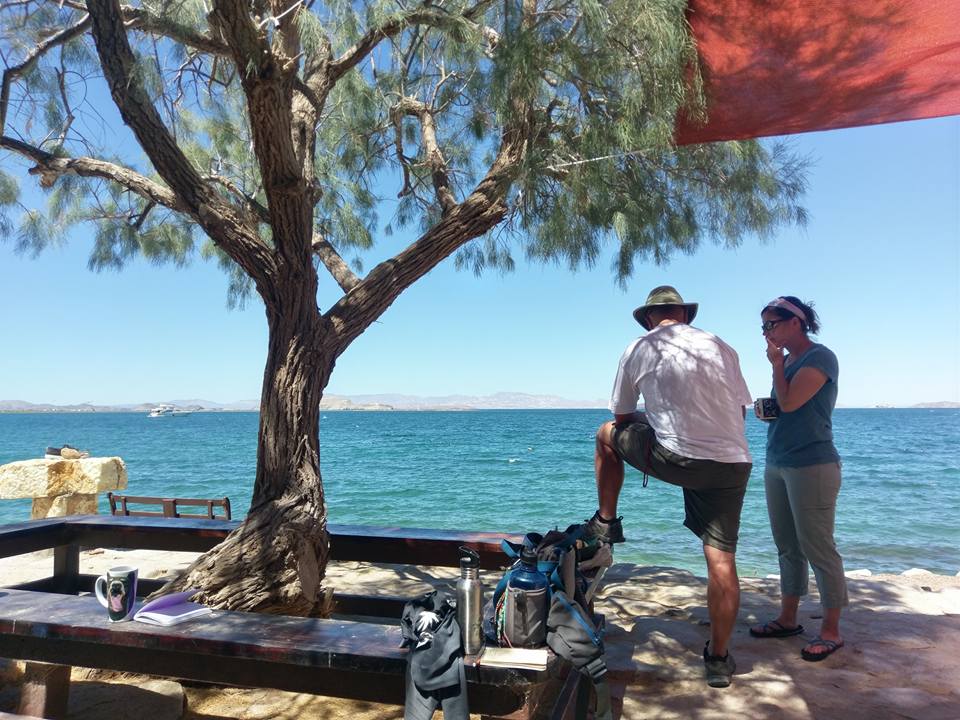
2016, 2017: Baja I: Field Methods (grad level field / web course), Miami University (Oxford, Ohio)
2013, 2015: Marine Ecology (grad level lecture course), BIO 609, Long Island University-Post (LIU-Post) (Brookville, NY)
2013-2015: Foundations in Biology II (non-majors undergrad lecture & lab: 5 sections), BIO2, LIU-Post
2011-2014: Ecology, (Biology majors undergraduate lecture & lab: 4 sections), BIO 109, LIU-Post
2012-2015: General Biology II (Biology majors undergraduate lab: 8 sections), BIO 104, LIU-Post
2011-2014: Foundations in Biology I (non-majors undergraduate lab: 5 sections), BIO1, LIU-Post
2011: Belize I: Forest & Marine Ecology (graduate level field / web course), Miami University
2010-2011: Issues in Biodiversity (graduate level web course: 3 sections), Miami University
2010-2011: Issues in Evolution (graduate level web course: 2 sections), Miami University
2009: Ecology and Evolution (Biology majors undergraduate course; team-taught), Goucher College (Towson, MD)
Teaching Philosophy and Professional Development
Over several years of teaching, my teaching philosophy has evolved as I have learned how to be a better instructor and help students take more responsibility for their own learning. I was also very fortunate to have been part of excellent training before I began teaching academically. While I was a postdoc at the Smithsonian Institution, I was accepted into an NSF-funded program called FIRST IV (Faculty Institutes for Reforming Science Teaching), the goal of which was to train postdocs interested in future academic careers to incorporate learner-centered methodologies into their teaching to achieve a higher level of undergraduate student learning. This program helps instructors move away from the traditional lecture-only style of teaching—which has been shown in many studies to have low retention of information—and instead move towards a more active classroom, where students are more engaged in their own learning and, in the end, better understand the lecture modules. As part of this professional development program, I attended two week-long intensive workshops in May 2009 and 2010 and learned through example ways in which to develop assignments, assessments, rubrics, and mini-lectures based on learner-centered and active-learning philosophies, which have been shown in many studies (e.g., Handelsman et al. 2004, Science) to enhance students’ retention, understanding, and processing of scientific information. The activities and assessments we developed during the workshop were vetted by our peers and supervising faculty. In particular, I was part of a group developing modules for an undergraduate ecology course, and I still use some of modules in the courses I have designed and taught over the years.
In my classes, I use a myriad of active learning activities during class time, including partner/group work and discussions, in-class “mini-labs”, and class-wide discussions, to assess learning and understanding of concepts within each class period. Furthermore, I design formative assessments that require a higher level of thinking and writing from students, i.e., analyzing data and drawing conclusions from the literature; designing experiments; developing arguments and finding evidence to support or refute them; writing question-based or argument-based essays; and in-class presentations. While the development of these classes requires a good deal of time, effort, and creativity, the benefit to students is profound: students that take learning into their own hands not only retain knowledge but actually understand concepts and research more than with traditional, instructor-centered teaching (Handelsman et al. 2004). Joseph Joubert once said: “To teach is to learn twice.” This statement has become even more relevant to me since taking part in the FIRST IV program, especially when I reflect back to my own time as a student and realize how much more I retained from courses that used similar methodologies. Although students may be less familiar with this type of teaching style in a traditional University setting, in my experience, they adapt quickly, and are generally much more interested, involved, and active during class-time. I have continued to maintain ties to FIRST IV and their professional development programs -- presently, I am taking part in a longitudinal study they are conducting with faculty who went through the program compared to controls. It has been incredibly fulfilling working to improve my instructional abilities through these opportunities, and also to help students realize their future interests and aspirations in the sciences.
Mentoring Experience
My mentoring philosophy with students has been to allow them to think for themselves, question frequently, and be accessible. I also realize that students retain concepts better when they get their hands dirty; thus I involve students in projects right away, having them take part as I train them. I also put my trust in students and their abilities, giving them respect and encouragement and helping ensure an effective, productive, and mutually beneficial relationship. I allow students to have independent thought, but I also do not let them flounder if they are requiring help. Most of the students I have worked with in the past have also gone on to have excellent careers of their own—many are now in graduate programs or in government or academic positions—and I intend to continue to develop such fruitful collaborations with high school, undergraduate and graduate students in the future.
As Graduate Advisor (15): Garrett Maggio, PhD student, 2023-present; Mic Schulte, MS student, ECU, 2023-present; Grace Loonam, MS student, ECU, 2023-present (co-advised); Chloe Gabriel, MS student, ECU, 2022-present (co-advised); Carter Stancil, PhD student, ECU, 2022-present (co-advised) (note: Carter Stancil received a prestigious NSF Graduate Research Fellowship in 2023 under my mentorship); Haley Hagemeier, MS student, ECU, 2021-2023; Nina Woodard, MS student, ECU, 2020-2022 (co-advised); Laura Lukas, MS student, ECU, 2019-2021; Kyle Swanson, MS student, ECU, 2018-2020 (co-advised); Timothy Lee, IDPBS Ph.D. student, ECU, 2017-2023; Christopher Moore, IDPBS Ph.D. student, ECU, 2016-2022; Rebecca Barnard, MS student, ECU, 2016-2018; Martha Sanderson, Biology master’s student, LIU-Post, 2014-2016; Michael Roy, Biology master’s student, LIU-Post, 2013-2015; Leidy Leon, Biology master’s student, LIU-Post, 2012-2014.
I have also supervised over 50 undergraduates and 4 high school students on various projects over the years. Notable accomplishments among these students include mentoring of three Shoals Marine Lab Parasite Ecology interns: Grace Loonam and Amanda Wolf in summer 2021; Anna van Dreser in summer 2019, Hyejoo Ro in summer 2018, and Collin Love in summer 2017. At ECU, four students have been instrumental in research projects in the lab, including: (1) Emily Edmonds, who received a competitive Undergraduate Research and Creativity Award (URCA) in Spring 2019 and was also Outstanding Senior among Biology students in December 2019; she is currently attending vet school at NC State. (2)Corey Winkler, who carried out his Honors Thesis in the lab in Spring 2019 and has now moved onto Dental School at ECU. (3) Christofer Brothers, who carried out his Honors Thesis in the lab in Spring 2018, received a competitive URCA award in Spring 2017, and now has a paper in review at JEMBE related to those efforts; he is now in a PhD program at UC Davis. (4) Matt Ruocchio, who carried out a summer internship in our lab and wrote a capstone project; his assistance on projects in the lab have led to two publications (Aquatic Invasions and PeerJ). While at LIU-Post, one undergrad student, Kelley Kroft completed an honors thesis in my lab and her thesis was then published in Aquatic Invasions. I also had two summer interns at LIU-Post that completed summer projects that were then published: Zachary Holmes (paper published in Ecology) and Laura Moritzen (paper published in Journal of Crustacean Biology). Finally also while at LIU-Post, I mentored a high school student, Jaclyn Onufrey from Wantagh High School (Wantagh, NY) in 2013-2014. Jaclyn was a semifinalist for the National Intel Talent Search Program for the 2013-2014 competition. Her manuscript was entitled: “Invasion of the Asian shorecrab (Hemigrapsus sanguineus) to Eastern USA: Population Genetics, Distribution, and Abundance” (https://student.societyforscience.org/intel-sts-2014-semifinalists)). Aspects of this work were included in our publication in Marine Biology.
Descending order:
2017, 2019, 2023: Conservation Biology (biology undergrad majors lecture course), BIOL 4800, ECU
2018, 2019, 2022: Aquatic Parasitology & Disease (biology undergrad and grad lecture/lab course), BIOL 4800, BIOL 6220, ECU
2018, 2019, 2021, 2022, 2023: Marine Parasitology & Disease (undergrad lecture and field course), BIOSM 3330 (Cornell), MEFB 506 (UNH), Shoals Marine Laboratory (Appledore Island, ME): www.shoalsmarinelaboratory.org/course/marine-parasitology-and-disease
2022, 2023: Marine Invasive Species (undergrad lecture and field course), BIOSM 3340 (Cornell) / MEFB 720 (UNH), Shoals
Marine Laboratory (Appledore Island, ME). https://www.shoalsmarinelaboratory.org/course/marine-invasive-species
2022: Conservation Biology, BIOL 7920, ECU, grad level lecture-based class
2015, 2016, 2017, 2018, 2020, 2021, 2023: Environmental Biology (non-majors undergrad lecture course), BIOL 1060, ECU
2020: Invasion Biology, BIOL 6850, grad level discussion class, ECU
2019: Comparative Immunology and Conservation Implications, BIOL 4800/6220 (team-taught undergrad and grad discussion course), ECU
2016, 2017: Baja I: Field Methods (grad level field / web course), Miami University (Oxford, Ohio)
2013, 2015: Marine Ecology (grad level lecture course), BIO 609, Long Island University-Post (LIU-Post) (Brookville, NY)
2013-2015: Foundations in Biology II (non-majors undergrad lecture & lab: 5 sections), BIO2, LIU-Post
2011-2014: Ecology, (Biology majors undergraduate lecture & lab: 4 sections), BIO 109, LIU-Post
2012-2015: General Biology II (Biology majors undergraduate lab: 8 sections), BIO 104, LIU-Post
2011-2014: Foundations in Biology I (non-majors undergraduate lab: 5 sections), BIO1, LIU-Post
2011: Belize I: Forest & Marine Ecology (graduate level field / web course), Miami University
2010-2011: Issues in Biodiversity (graduate level web course: 3 sections), Miami University
2010-2011: Issues in Evolution (graduate level web course: 2 sections), Miami University
2009: Ecology and Evolution (Biology majors undergraduate course; team-taught), Goucher College (Towson, MD)
Teaching Philosophy and Professional Development
Over several years of teaching, my teaching philosophy has evolved as I have learned how to be a better instructor and help students take more responsibility for their own learning. I was also very fortunate to have been part of excellent training before I began teaching academically. While I was a postdoc at the Smithsonian Institution, I was accepted into an NSF-funded program called FIRST IV (Faculty Institutes for Reforming Science Teaching), the goal of which was to train postdocs interested in future academic careers to incorporate learner-centered methodologies into their teaching to achieve a higher level of undergraduate student learning. This program helps instructors move away from the traditional lecture-only style of teaching—which has been shown in many studies to have low retention of information—and instead move towards a more active classroom, where students are more engaged in their own learning and, in the end, better understand the lecture modules. As part of this professional development program, I attended two week-long intensive workshops in May 2009 and 2010 and learned through example ways in which to develop assignments, assessments, rubrics, and mini-lectures based on learner-centered and active-learning philosophies, which have been shown in many studies (e.g., Handelsman et al. 2004, Science) to enhance students’ retention, understanding, and processing of scientific information. The activities and assessments we developed during the workshop were vetted by our peers and supervising faculty. In particular, I was part of a group developing modules for an undergraduate ecology course, and I still use some of modules in the courses I have designed and taught over the years.
In my classes, I use a myriad of active learning activities during class time, including partner/group work and discussions, in-class “mini-labs”, and class-wide discussions, to assess learning and understanding of concepts within each class period. Furthermore, I design formative assessments that require a higher level of thinking and writing from students, i.e., analyzing data and drawing conclusions from the literature; designing experiments; developing arguments and finding evidence to support or refute them; writing question-based or argument-based essays; and in-class presentations. While the development of these classes requires a good deal of time, effort, and creativity, the benefit to students is profound: students that take learning into their own hands not only retain knowledge but actually understand concepts and research more than with traditional, instructor-centered teaching (Handelsman et al. 2004). Joseph Joubert once said: “To teach is to learn twice.” This statement has become even more relevant to me since taking part in the FIRST IV program, especially when I reflect back to my own time as a student and realize how much more I retained from courses that used similar methodologies. Although students may be less familiar with this type of teaching style in a traditional University setting, in my experience, they adapt quickly, and are generally much more interested, involved, and active during class-time. I have continued to maintain ties to FIRST IV and their professional development programs -- presently, I am taking part in a longitudinal study they are conducting with faculty who went through the program compared to controls. It has been incredibly fulfilling working to improve my instructional abilities through these opportunities, and also to help students realize their future interests and aspirations in the sciences.
Mentoring Experience
My mentoring philosophy with students has been to allow them to think for themselves, question frequently, and be accessible. I also realize that students retain concepts better when they get their hands dirty; thus I involve students in projects right away, having them take part as I train them. I also put my trust in students and their abilities, giving them respect and encouragement and helping ensure an effective, productive, and mutually beneficial relationship. I allow students to have independent thought, but I also do not let them flounder if they are requiring help. Most of the students I have worked with in the past have also gone on to have excellent careers of their own—many are now in graduate programs or in government or academic positions—and I intend to continue to develop such fruitful collaborations with high school, undergraduate and graduate students in the future.
As Graduate Advisor (15): Garrett Maggio, PhD student, 2023-present; Mic Schulte, MS student, ECU, 2023-present; Grace Loonam, MS student, ECU, 2023-present (co-advised); Chloe Gabriel, MS student, ECU, 2022-present (co-advised); Carter Stancil, PhD student, ECU, 2022-present (co-advised) (note: Carter Stancil received a prestigious NSF Graduate Research Fellowship in 2023 under my mentorship); Haley Hagemeier, MS student, ECU, 2021-2023; Nina Woodard, MS student, ECU, 2020-2022 (co-advised); Laura Lukas, MS student, ECU, 2019-2021; Kyle Swanson, MS student, ECU, 2018-2020 (co-advised); Timothy Lee, IDPBS Ph.D. student, ECU, 2017-2023; Christopher Moore, IDPBS Ph.D. student, ECU, 2016-2022; Rebecca Barnard, MS student, ECU, 2016-2018; Martha Sanderson, Biology master’s student, LIU-Post, 2014-2016; Michael Roy, Biology master’s student, LIU-Post, 2013-2015; Leidy Leon, Biology master’s student, LIU-Post, 2012-2014.
I have also supervised over 50 undergraduates and 4 high school students on various projects over the years. Notable accomplishments among these students include mentoring of three Shoals Marine Lab Parasite Ecology interns: Grace Loonam and Amanda Wolf in summer 2021; Anna van Dreser in summer 2019, Hyejoo Ro in summer 2018, and Collin Love in summer 2017. At ECU, four students have been instrumental in research projects in the lab, including: (1) Emily Edmonds, who received a competitive Undergraduate Research and Creativity Award (URCA) in Spring 2019 and was also Outstanding Senior among Biology students in December 2019; she is currently attending vet school at NC State. (2)Corey Winkler, who carried out his Honors Thesis in the lab in Spring 2019 and has now moved onto Dental School at ECU. (3) Christofer Brothers, who carried out his Honors Thesis in the lab in Spring 2018, received a competitive URCA award in Spring 2017, and now has a paper in review at JEMBE related to those efforts; he is now in a PhD program at UC Davis. (4) Matt Ruocchio, who carried out a summer internship in our lab and wrote a capstone project; his assistance on projects in the lab have led to two publications (Aquatic Invasions and PeerJ). While at LIU-Post, one undergrad student, Kelley Kroft completed an honors thesis in my lab and her thesis was then published in Aquatic Invasions. I also had two summer interns at LIU-Post that completed summer projects that were then published: Zachary Holmes (paper published in Ecology) and Laura Moritzen (paper published in Journal of Crustacean Biology). Finally also while at LIU-Post, I mentored a high school student, Jaclyn Onufrey from Wantagh High School (Wantagh, NY) in 2013-2014. Jaclyn was a semifinalist for the National Intel Talent Search Program for the 2013-2014 competition. Her manuscript was entitled: “Invasion of the Asian shorecrab (Hemigrapsus sanguineus) to Eastern USA: Population Genetics, Distribution, and Abundance” (https://student.societyforscience.org/intel-sts-2014-semifinalists)). Aspects of this work were included in our publication in Marine Biology.
|
|
|
|